

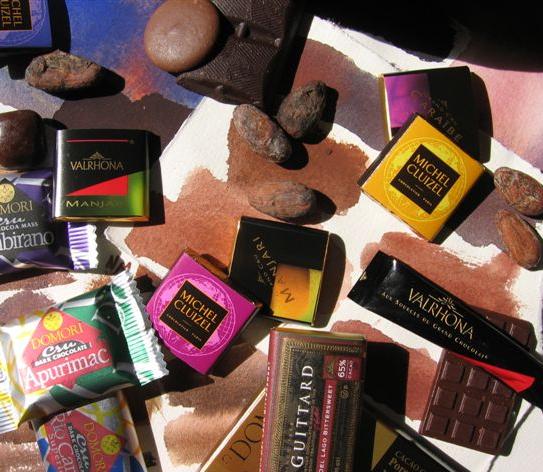
 My breakfasts of late have been full of theobroma. I'm sitting here with this lovely pile of bars from the NASFT Fancy Food Show and trying to write this post for days. Normally it takes 1-3 days for a PB post to evolve. Sometimes I wake up & it's like automatic writing -> et voilà. Other ideas come to me at the pool and get written on the subway.
This post on chocolate tasting - well I can't make it up or use le "trope" as Maitress calls my stream-of-consciousness skills. Theobroma excess is blocking me.
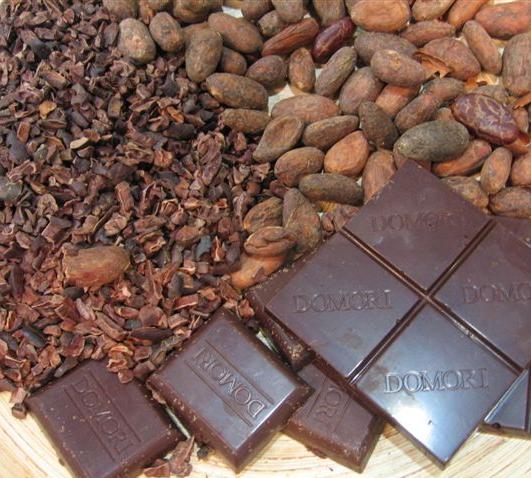 I don't know BEANS about Chocolate other than there are 3 major cacao beans:
1. Criollo - are difficult to grow and planted on a limited scale and produce few but highly-prized beans - valued for aroma and complexity.
2. Forestero - are easy to grow, fruitful, and produce 90% of the world's cocoa beans – but their flavor and aroma is less distinctive than Criollo beans.
3. Trinitario - is a cross between the Criollo and Forestero and named after it's original source, Trinidad. It's hardier than the Criollo with more intense flavour than Forestero.
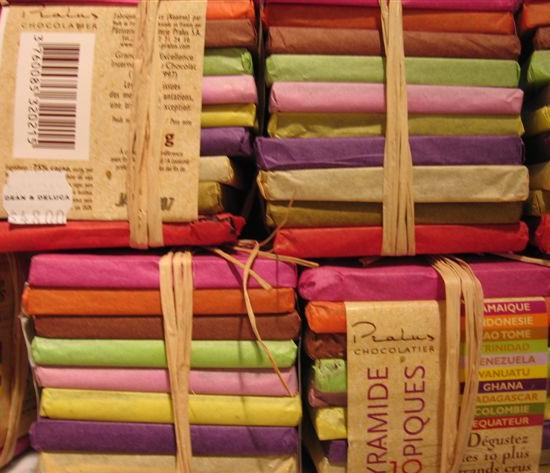 Each one of this stack of Chocolat Pralus bars comes from a different region. Check out their amazing site. There are many other hard-to-pronounce names you'll stumble across when tasting bars.
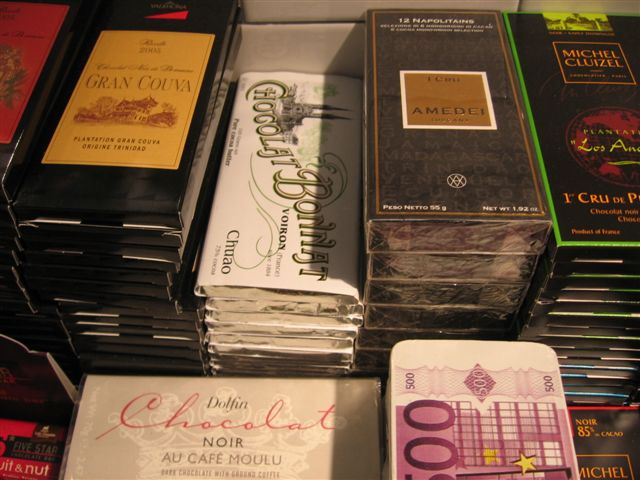
Choco names can refer to the region of origin like Sur Del Lago or Sambriano. Or be proprietary names of a particular chocolate maker like Vahrona: Manjara, Guanajai, Pur Caraibe.
Or a plantation name like Cluizel's: Concepcion, Tamarina, Maralumi..
Or Domori's Apurimac, Carenero, Sambriano etc..
 Do you love chocolate? If you're a big fan of Hershey's, truffles, or bonbons
 But bars are the feast of chocolate purists so why not become a chocolate connoisseur? A terrific web site, 70% will help out with their list of 10 best bars and the reasons why. And many chocolate companies make tasting easier by producing mini squares - see the top photo.
Some like Cluizel have packaged different regional squares together and included tasting instructions. Enough! On to tasting.
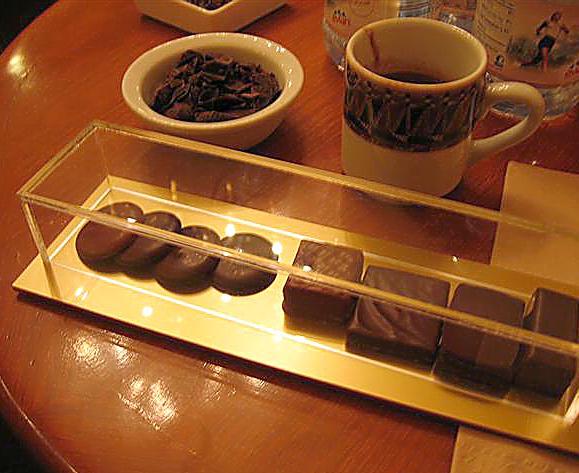 This is from a La Maison du Chocolat tasting of ganache, a mix of equal parts chocolate and cream, so not relevant here but I liked the way they laid out the small-sized samples + water + chocolate nibs...
If you've been to even one wine tasting you're ahead of the game. You'll know that all your senses will be involved and to start with a clean palate.
1. 1st LOOK at the bar for color, sheen, texture
2. FEEL the bar - this you don't have to do with wine unless you're into Champagne baths..
3. Then break the bar to HEAR it's SNAP - a dull thud can mean too much fat/cocoa butter
 4. SMELL the bar. This step is vital. Your nose can detect up to 200-300 aromas. A really good bar will have a distinctive parfum that should be savored before you place it in your mouth.
5. NO CHOMPING - (but you do want to chew when wine tasting)
6. Let a small piece MELT on the back of your tongue to get it's true flavor and MOUTH FEEL.
This can be the hardest parts of tasting chocolate - not chewing.
You may want to take some notes here (as with wine tasting) speaking of which...
As for painting chocolate bars - I'm sticking with tasting them for now. They're hard

0 Yorumlar